The Cost of Missed Calls for Small Business: A Worked Example
Telofia team · · 10 min read
What is the cost of missed calls for small business? It's the revenue you'd have earned from callers who couldn't get through and went elsewhere. Work it out with one formula: calls per week × share missed × share that would have booked × average job value. Below you'll find a worked example with assumptions and ways to cut the loss.
Contents
- What is the cost of missed calls for small business? A worked example
- How do you calculate the loss with your own figures?
- What doesn't this calculation show?
- How can you stop losing customers to missed calls?
- What can you improve today without new tools?
- How does an AI receptionist keep callers with your business?
- What should you watch for when choosing how to handle calls?
- See how many calls you could win back
- Frequently asked questions
What is the cost of missed calls for small business? A worked example
The cost of missed calls is the revenue from jobs you don't get because the customer couldn't get through and didn't call again. You can work it out with one formula.
Weekly loss = calls per week × share of calls missed × share of those that would have turned into a job × average job value.
Example assumptions: a service business gets 40 calls a week, one in five goes unanswered, one in four of the missed callers would have booked, and the average job is worth £80. These are example figures, so swap in your own.
- 40 calls, one in five missed = 8 missed calls a week
- 8 missed calls, one in four of which would have booked = 2 lost jobs a week
Example result with an assumed job value of £80: 2 × £80 = £160 a week, or £8,320 a year over 52 working weeks.
The one-in-four assumption already allows for people who call back or leave a message. If your customers often ring again, lower it. If they call about urgent problems, you should probably raise it.
How do you calculate the loss with your own figures?
The simplest approach is to take the figures from one ordinary week and plug them into the same formula. You need four numbers:
- Calls per week: the call log on your business phone or a report from your phone system. Count inbound calls only.
- Share of calls missed: missed and rejected calls divided by all inbound calls.
- Share that would have booked: how many new enquiries turn into a job when you actually speak to the customer. For missed calls, be cautious and assume fewer.
- Average job value: your monthly revenue divided by the number of jobs that month.
Example for a tradesperson, with assumptions: a sole-trader plumber gets 30 calls a week and misses one in three because their hands are in a pipework job. Three in ten of the missed callers would have booked a repair, and the average job is £120. Result: 10 missed calls → 3 jobs × £120 = £360 a week, or £18,720 a year.
Also run a cautious version, for example with half the assumed booking rate. Even the lower figure shows how much you can sensibly spend on answering your business calls.
What doesn't this calculation show?
The formula only counts the first job, so it usually understates the loss. It leaves out costs that are hard to put a figure on but easy to spot in day-to-day work:
- Repeat customers: someone who chose another firm once will most likely call that firm next time something breaks.
- Referrals: a customer you didn't help won't recommend you to friends.
- Time spent calling back: you ring people who have already found someone else in the meantime.
- Interruptions: answering the phone mid-job makes the job take longer and breaks your concentration.
- Urgent jobs out of hours: an emergency in the evening or at the weekend goes to whoever picks up.
How can you stop losing customers to missed calls?
A customer whose call went unanswered needs one of two things: a conversation now, or certainty about when someone will get back to them. Each option below gives them one of these, but some work better than others.
| Option | What the caller gets | Main risk | Best for |
|---|---|---|---|
| Voicemail | A recording asking them to leave a message | They may hang up without leaving one | The minimum for any business |
| Calling back at set times | A promise of contact within a set time | They choose someone quicker in the meantime | Low call volumes |
| Text after a missed call | A message saying when you'll call back | Still no appointment and no answer | Backing up other options |
| Forwarding to a colleague | A conversation with a person | A busy colleague won't answer either | Teams with someone in the office |
| Call answering service | A call with an agent and a message taken | Per-call charges, limited knowledge of your business | Businesses that want a human voice |
| In-house receptionist | Full call handling during office hours | Highest fixed cost, no cover out of hours | Businesses with busy premises |
| AI receptionist | A 24/7 conversation, an appointment or a handover | Your business information needs preparing first | Businesses that often can't pick up |
If your calculation shows you losing a three-figure sum every week, the cheap options alone, voicemail and text messages, only go part of the way, because they don't give the customer an appointment. You can compare the cost of a receptionist and an answering service in our guide to telephone answering service cost in the UK.
What can you improve today without new tools?
A few simple changes shorten the time a customer waits for an answer. They only cost you a little time:
- A specific voicemail greeting: say when you'll call back (e.g. “within 2 hours on working days”) and ask for the address and a short description of the problem.
- Fixed callback slots: for example three 15-minute slots a day, blocked out in your diary like a job.
- A text after a missed call: if your phone or phone system has this feature, include when you'll be in touch or a booking link in the message.
- An online booking link: on your website and your business listing in search engines, so some customers can book without calling.
- Forwarding when you don't answer: on mobile networks this is usually the code
**61*+NUMBER**20#, where you enter the destination number in international format (calls forward after 20 seconds). You can usually cancel all forwarding with##002#.
Some networks use different codes, and forwarding may be charged. Check the codes and charges in your network's price list or online account.
How does an AI receptionist keep callers with your business?
An AI receptionist is software that answers calls, talks to the customer and either deals with the request or passes it on. Telofia's virtual receptionist answers calls 24/7, books appointments in Google Calendar, takes messages and transfers urgent calls to you or your team.
The simplest setup looks like this: your number stays the same, and calls you don't answer go to the assistant.
- Customer calls your number
- Nobody answers within 20 seconds
- The AI assistant picks up
- It finds out what's needed and a free slot
- The appointment goes into your calendar
- You get a summary by email
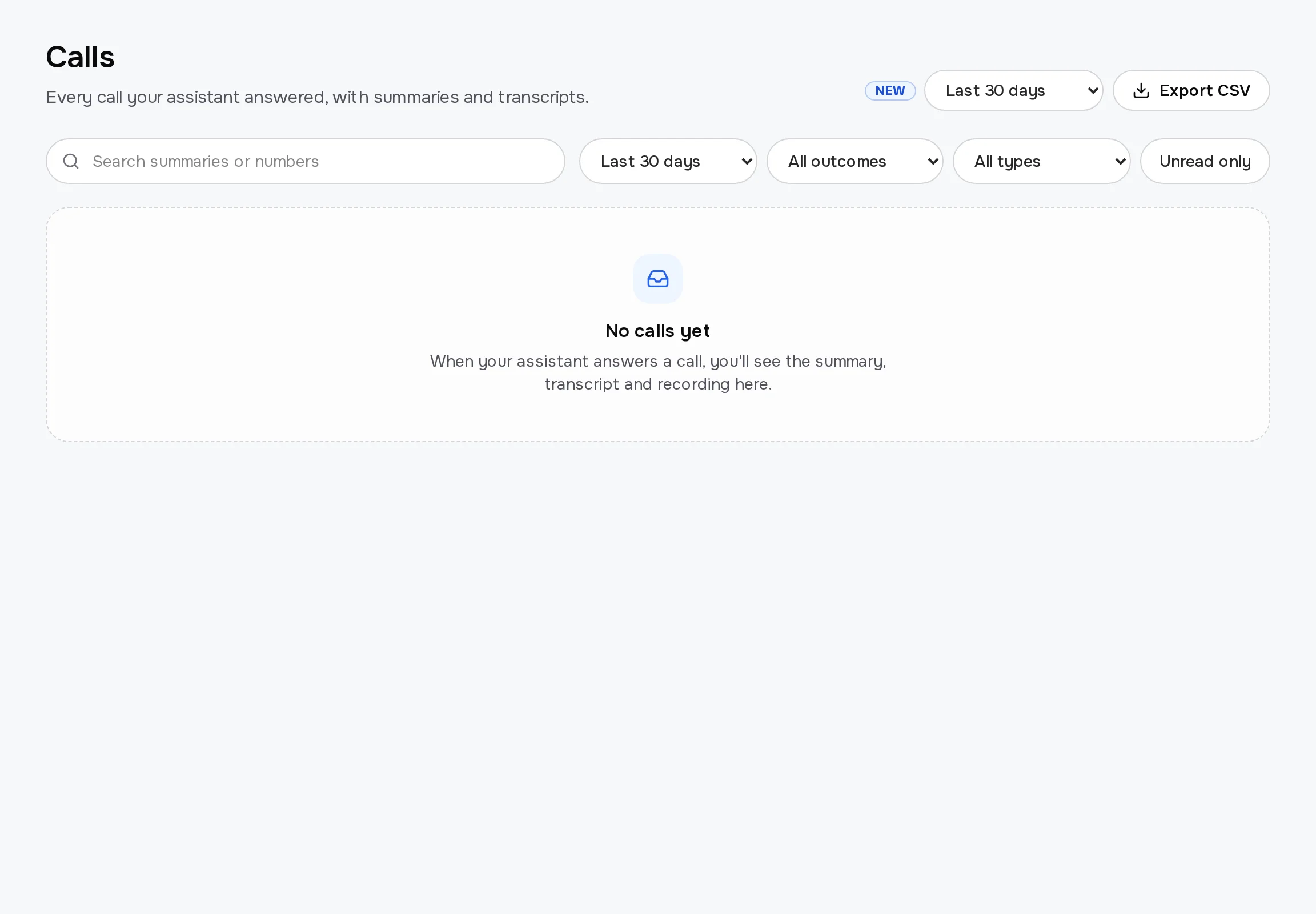
Every call appears in Calls with a summary and transcript, and recordings are kept depending on your plan (from 30 days). You can see at a glance who called, what about and whether they booked.
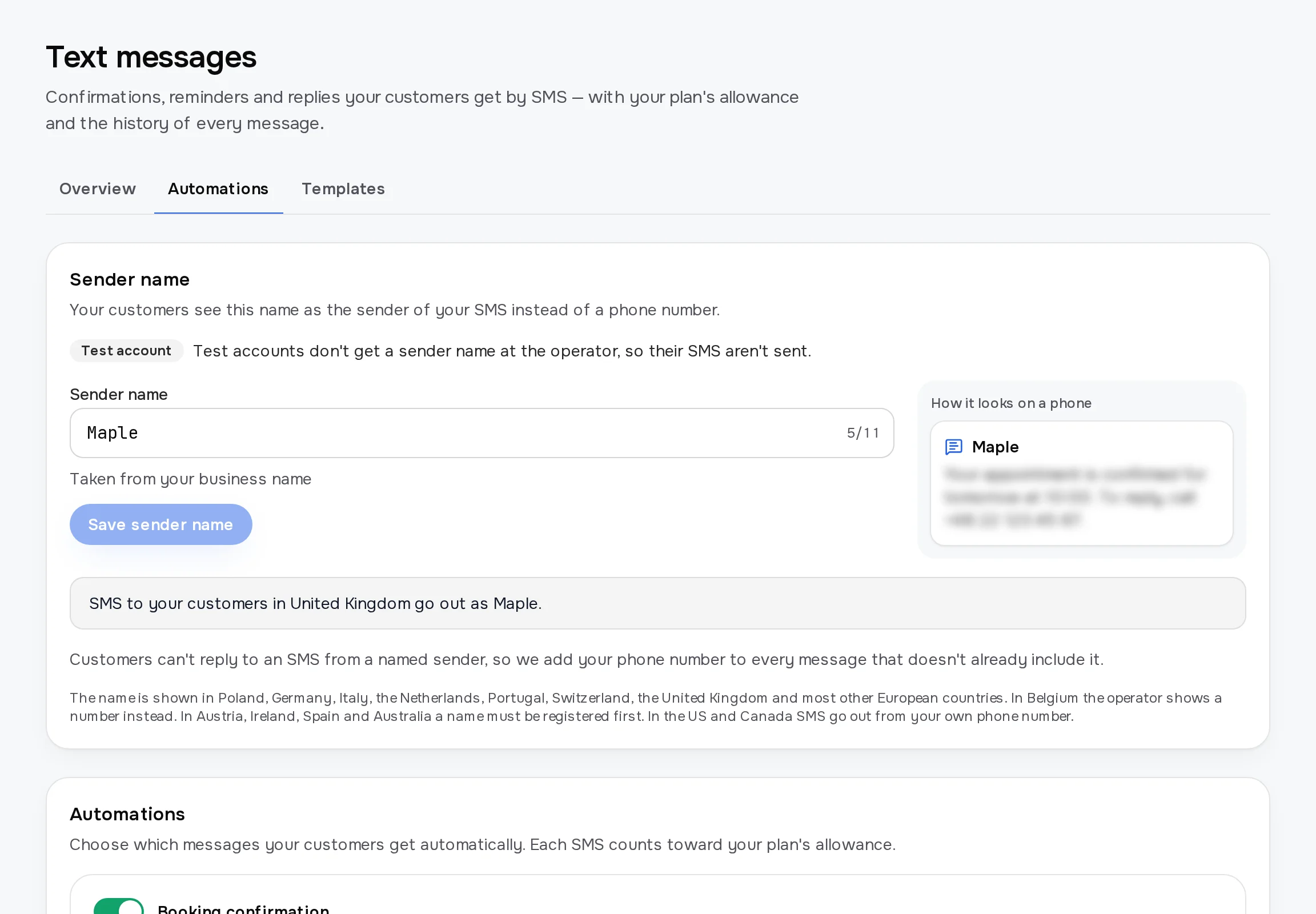
In the SMS tab you can switch on automations, including Booking confirmation, Appointment reminder and Missed call. The customer gets written confirmation and is less likely to forget the appointment.
Setup takes about five minutes. You paste in your website address so the assistant can learn about your business, test it in your browser and set up call forwarding. You'll find the details in how it works.
Telofia costs from £35 a month (excl. VAT) on yearly billing. You can compare plans on the pricing page.
What should you watch for when choosing how to handle calls?
Before you choose a solution, check it against these points:
- Use your own figures: put the numbers from one week into the formula, not rough estimates.
- The customer gets an appointment, not just a promise: a solution that books straight away settles the matter in a single call.
- Urgent calls reach a person: decide when a call should be transferred to you, for example for a breakdown or a leak.
- Evenings and weekends: check what a customer hears if they call at 21:00 or on a Sunday.
- Measure the result after a month: run the formula again and compare the number of missed calls and jobs.
See how many calls you could win back
Work out your loss with the formula from the example, then see how many of those calls the assistant can take for you. Telofia gives you a 14-day trial with 30 free minutes, and you can test the assistant in your browser without entering a card.
Create an account and test the assistant. Hear for yourself how it greets your customers and books an appointment.
Frequently asked questions
How many missed calls is too many?
There's no single threshold, because it all depends on the value of a job. Put your own figures into the formula: if the weekly loss is higher than the cost of handling your calls, it's worth acting straight away.
Is it enough to call back customers from missed calls?
Calling back helps, but a customer with an urgent problem may ring another business in the meantime. The shorter they wait to hear from you, the better the chance the job stays with you.
Does voicemail solve the problem of missed calls?
Only partly. The caller may hang up without leaving a message, and even if they do leave one, they're still waiting for you to call and don't have an appointment yet.
Do I need to change my number to use an AI receptionist?
No. You can keep your current number and forward calls from it, and every paid plan includes a Telofia number. During the trial you test the assistant in your browser, and call transfers to your team only work once you've chosen a plan.
Does the customer know they're talking to an AI?
Yes. Telofia's assistant says it's an AI at the start of every call, in line with the EU AI Act.
Try Telofia on your own calls
Set up your AI receptionist in about five minutes: 14-day trial with 30 free minutes, no card needed for the browser test.
Prefer to hear it first?
Enter your number and the assistant calls you within seconds, acting as the receptionist of your business.
Also available in: Polski, Deutsch, Español, Français, Italiano, Português, Nederlands